

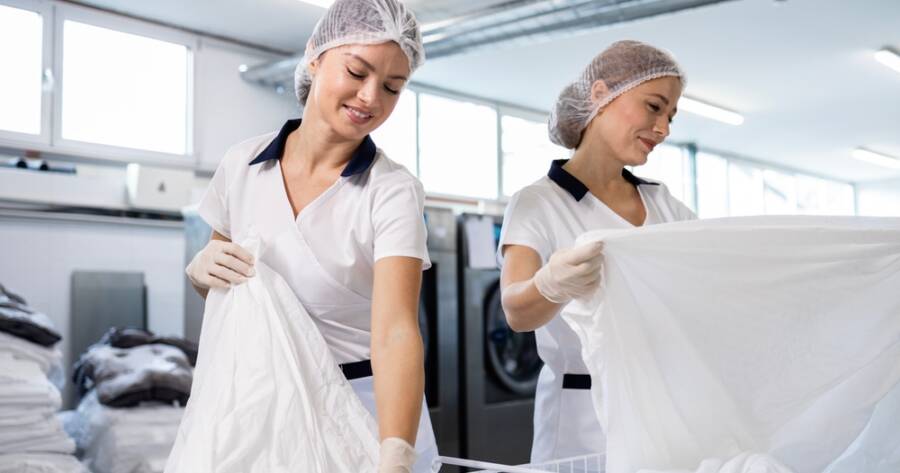
Medical linens play a vital role in patient care, making proper cleaning and handling essential in healthcare settings. Behind every freshly laundered sheet, gown, and blanket is a carefully controlled process designed to maintain hygiene. Understanding how medical linens are cleaned can provide valuable insight into the systems that help protect patients, staff, and visitors while ensuring healthcare facilities operate safely and efficiently.
Understanding Healthcare Laundry Operations
Healthcare laundry operations are a critical component of infection control and patient safety in medical facilities. The process involves stringent guidelines and practices to ensure that linens and textiles used in healthcare settings are hygienically clean and safe for use. These operations must adhere to guidelines set by organizations such as the CDC and AAMI to prevent the spread of infections and maintain high standards of cleanliness (source).
Key Requirements for Cleaning Medical Linens
Cleaning medical linens involves several key requirements to ensure they are free from harmful bacteria and pathogens. The CDC recommends washing linens at temperatures of at least 160°F (71°C) for a minimum of 25 minutes, using approved chemicals and detergents. This process is crucial for eliminating microorganisms and ensuring the safety of patients and healthcare workers (source). Additionally, the use of personal protective equipment (PPE) by laundry handlers is essential to prevent contamination during the handling and transportation of soiled linens (source).
Outsourcing vs. In-House Laundry Services
Many healthcare facilities are shifting from in-house laundry operations to outsourcing services. This transition requires careful evaluation of cost efficiencies while maintaining high standards for textile care and infection prevention.
Outsourcing can offer benefits such as access to industrial-grade equipment and compliance with evolving regulations. However, it also poses risks of reduced oversight and potential contamination during transportation and handling (source). Infection preventionists play a crucial role in mitigating these risks by establishing quality benchmarks and conducting regular assessments of laundry facilities (source).
Preventing Cross-Contamination in Laundry Operations
Preventing cross-contamination is a critical aspect of healthcare laundry operations. This involves implementing strict procedures for the separation of soiled and clean linens, using designated containers and storage areas.
Regular cleaning schedules for linens and equipment are vital to maintain hygiene standards. Facilities should also consider additional protective measures, such as using bacteria-inhibiting softeners and storing clean laundry in hygienic plastic bags (source).
Importance of Proper Linen Handling and Storage
Proper handling and storage of linens are also essential to prevent contamination and ensure patient safety. Clean linens must be stored in hygienically sanitary locations, with handling restricted to staff practicing proper hygiene.
The use of sanitized carts and containers with physical barriers can minimize contamination risks during distribution. Additionally, maintaining positive air pressure in storage areas and ensuring textiles are protected from environmental exposure are crucial steps in the staging and distribution process (source).
Why You Should Learn More About Healthcare Laundry Operations Today
Understanding the intricacies of healthcare laundry operations is vital for maintaining high standards of infection prevention and patient safety. With the increasing complexity of healthcare regulations and the critical role of textiles in patient care, staying informed about best practices and compliance requirements is essential.
Whether considering outsourcing or enhancing in-house operations, healthcare facilities must prioritize effective linen management to ensure the well-being of patients and staff. By learning more about these operations, healthcare providers can make informed decisions that enhance efficiency, safety, and quality of care.