

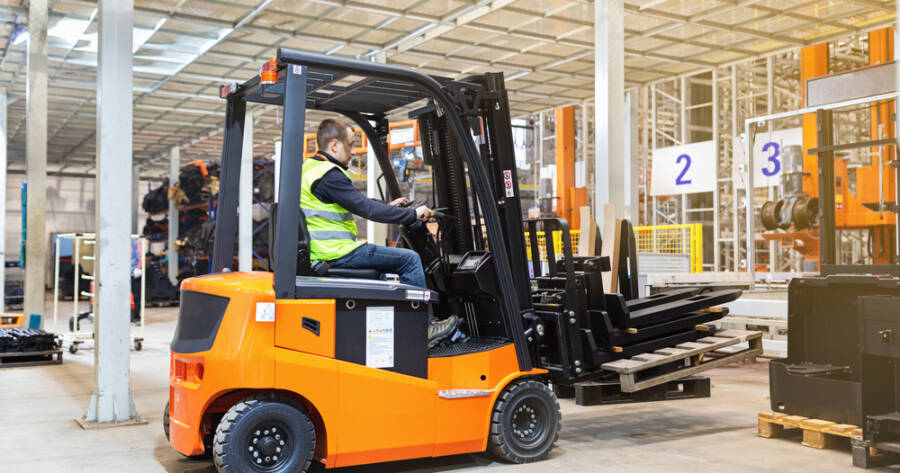
Forklifts are vital in logistics and warehousing, enhancing material handling and transportation efficiency. Their role extends across industries like construction, manufacturing, and retail, where they improve safety and productivity. Understanding forklift operations and their diverse applications can lead to rewarding career opportunities, emphasizing the importance of proper training and certification for workplace safety and efficiency.
The Role of Forklifts in Warehouses and Facilities
Forklifts are indispensable tools in the logistics and warehousing sectors, playing a crucial role in material handling and transportation. These machines are designed to lift, carry, and transport heavy loads such as palletized goods, raw materials, and finished products efficiently and safely.
In warehouses, forklifts optimize operations by lifting and stacking pallets, organizing goods on high shelves, and maximizing space through compact storage arrangements (source). This efficiency is vital for maintaining a streamlined supply chain and ensuring timely product delivery.
Forklifts in Various Industries
Beyond warehousing, forklifts are utilized across multiple industries. In the construction sector, rough-terrain forklifts navigate challenging terrains to lift heavy construction materials, machinery, and equipment, aiding in project completion.
The manufacturing industry also relies on forklifts to transport raw materials and intermediate goods, enhancing production efficiency and reducing manual labor (source). In the retail industry, forklifts are essential for moving, storing, and rotating heavy loads efficiently, ensuring that goods are handled safely and effectively within warehouses and other facilities (source).
Safety and Efficiency in Forklift Operations
Forklifts significantly enhance workplace safety by minimizing manual lifting, which reduces the risk of musculoskeletal injuries and accidents. Modern forklifts are equipped with safety features that adapt to various work environments, minimizing incidents like spills.
That said, proper forklift certification and training are still vital for maintaining a safe and productive workplace. Online training courses ensure OSHA compliance, allowing employees to earn their certifications quickly and renew every three years, thus boosting workplace safety and performance (source).
Types of Forklifts and Their Applications
Forklifts are divided into seven OSHA-defined classes, each designed for specific environments and workloads (source). Classes I, II, and III are electric motor forklifts, commonly used indoors due to zero emissions and quiet operation. Class I rider forklifts are widely used in warehouses and retail distribution centers for moving palletized goods. Class II forklifts are built for narrow aisles, making them ideal for tight storage spaces, while Class III includes hand-controlled equipment like electric pallet jacks and stackers for lighter, short-distance tasks.
Classes IV and V include internal combustion forklifts powered by diesel, LPG, or gasoline. These machines offer stronger torque and are better suited for outdoor or heavy-duty applications, with Class IV using solid tires and Class V using pneumatic tires. Class VI forklifts are tow tractors used for pulling loads rather than lifting them, often in airports or manufacturing plants. Class VII forklifts are rough-terrain machines built for construction sites and uneven outdoor surfaces, offering stability and power in demanding conditions.
Why You Should Learn More About Forklift Operating Jobs Today
Understanding the role of forklifts in various industries highlights their importance in maintaining efficient operations and ensuring workplace safety. As forklifts continue to be integral to logistics, construction, manufacturing, and retail, the demand for skilled forklift operators remains high.
Learning more about forklift operating jobs can open up numerous career opportunities in these sectors. With proper training and certification, individuals can contribute to safer and more efficient workplaces, making forklift operation a valuable and rewarding career path.